Software grew by accretion
ERP, MES, PLC/SCADA, CAM and QMS each arrived with their own data model, clock and decision scope. The same spindle ends up described five different ways, and nothing guarantees those descriptions agree at any instant.
Every part we make is inspected and documented with AI assistance — so you don't get a promise of quality, you get the data that proves it.
Traditional manufacturers inspect 2–10% of parts by hand and ask you to trust the rest. TruSkew uses AI-assisted computer vision to inspect every part in production and hands you a per-part quality report.
In sectors where failure means recalls, mission failure, or patient harm — proof beats promises.
We inspect parts with AI-assisted computer vision at production speed.
"You receive an AI-assisted inspection report with a deviation heat-map for every part."
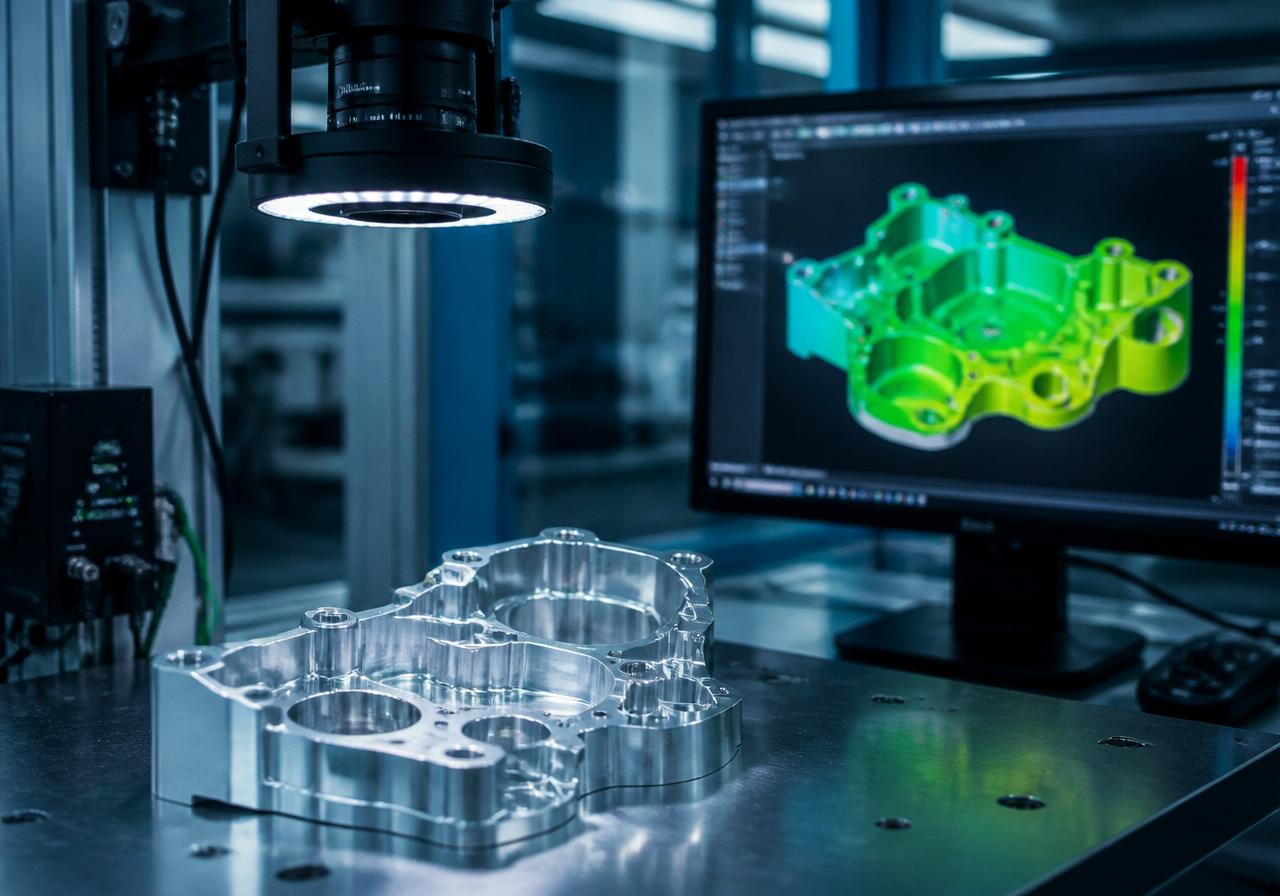
We catch defects that manual sampling can miss.
"The difference between 99% and 99.99% — which in defence and aerospace is everything."
Intelligent agents that quote, review, and coordinate — in minutes.
"Every agent is auditable — every decision is logged with the data it acted on."
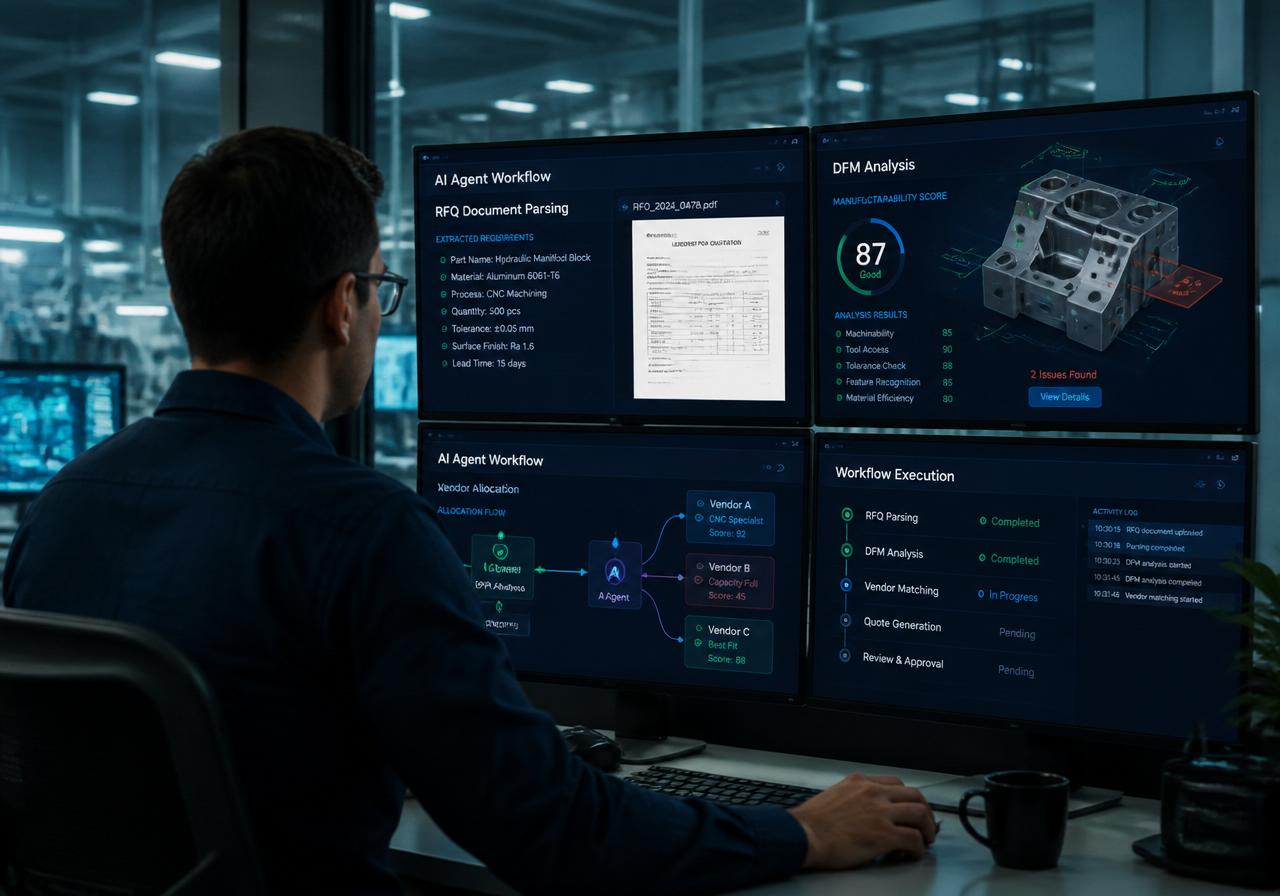
We help prevent defects before we cut metal.
"Bad parts prevented in silicon are bad parts you never pay for."
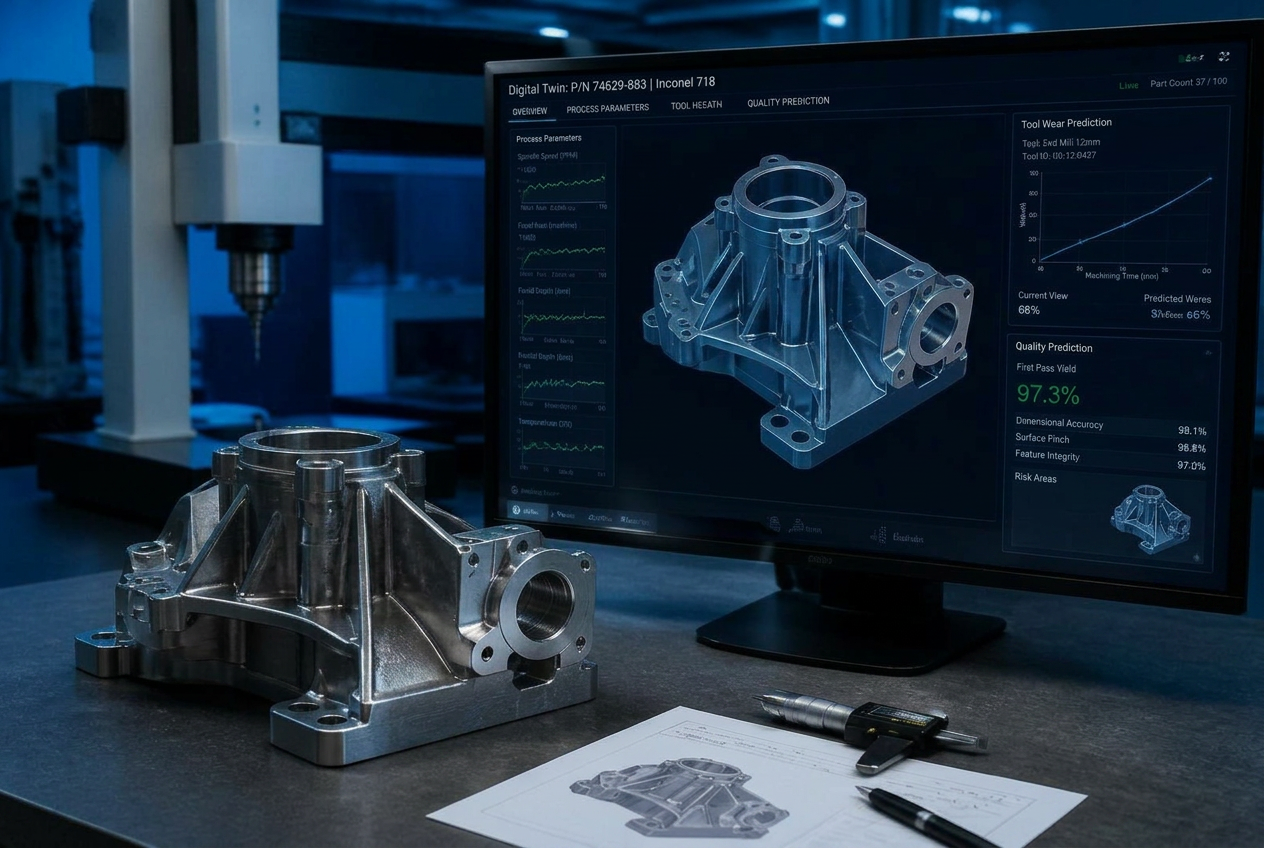
The system behind the system.
An agentic operating layer for distributed precision manufacturing. It gives our partner network the one thing it has never had — a single authoritative state of every drawing, order, machine and inspection — and puts specialised AI agents on top of it to quote, allocate, inspect and certify work at the speed the market now demands.
ERP, MES, PLC/SCADA, CAM and QMS each arrived with their own data model, clock and decision scope. The same spindle ends up described five different ways, and nothing guarantees those descriptions agree at any instant.
Capacity sits across independent job shops. Drawing revisions, work-in-progress, tool condition and free capacity live in WhatsApp threads and inboxes. The costliest error in this industry is 200 good parts made to an obsolete revision.
Vision models, wear models and forecasting are deployed as point solutions. Whether the scheduler actually consumes them is resolved manually. Intelligence accumulates at the edges while the coordination core stays rule-based.
Read top-down: governance at the top, the shop floor at the bottom. Select a layer to see what it prevents.
Defines which decisions run autonomously, which need a named engineer's confirmation, and which are prohibited outright — plus an append-only audit record sufficient for aerospace and defence configuration control.
What this prevents
An autonomous system that cannot show what it did, on what evidence, and what it rejected.
Work order, route card, vendor PO with revision and MTC clause, QC report, delivery challan, tax invoice and e-way bill — generated from live state rather than retyped. Preconditions are re-verified immediately before dispatch.
What this prevents
Paperwork that contradicts the parts in the crate.
Every machine, partner shop, tool, fixture and inspection slot is represented as an agent that bids for work. Bids must pass a capability and feasibility filter before they are priced — a shop that cannot hold the tolerance is rejected, not merely outbid.
What this prevents
Winning a job on price that was never physically achievable.
Drawing understanding, DFM, cost modelling, wear and yield prediction, a live manufacturing knowledge graph, and an explanation service. These read state and write proposals — never direct commands.
What this prevents
A model quietly taking a decision that no engineer ever reviewed.
One authoritative record per part, order and asset — published with its staleness, residual and confidence attached. If the state is too old for the class of decision being asked, the kernel refuses and the declared fallback applies.
What this prevents
Two systems acting confidently on two different versions of the same truth.
Partner shops, CNC controllers, vision cells, sensors and gauges exposed through one uniform interface — capability, state, health — regardless of vendor, protocol or machine age.
What this prevents
A 1998 lathe and a 2025 five-axis centre needing two different integration projects.
Ten specialised agents. Every one of them auditable, every decision logged with the data it acted on.
Agent 1 of 10
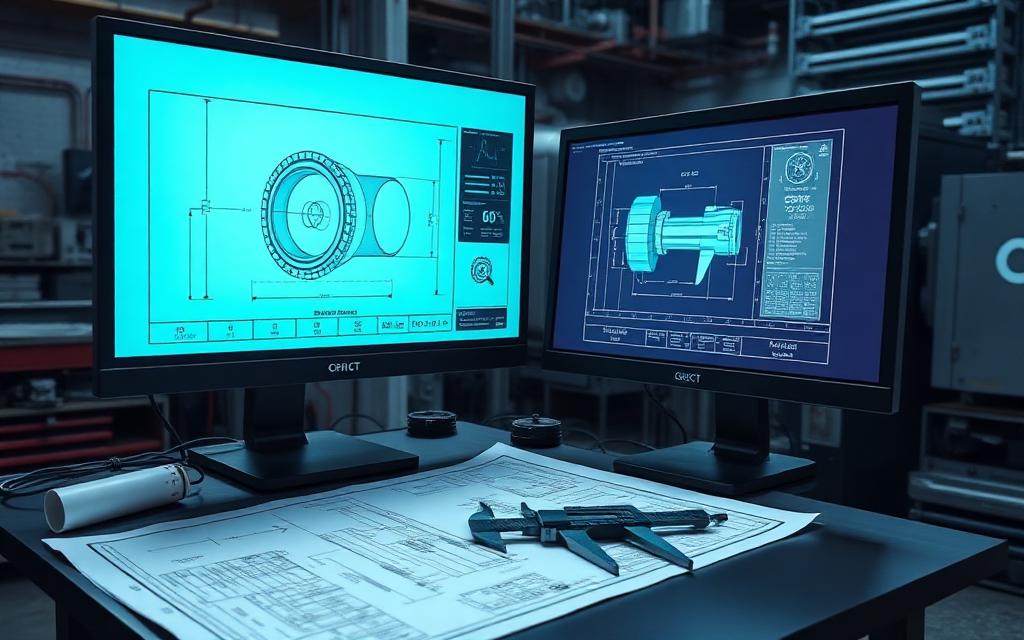
Reads the drawing, extracts GD&T, material and tolerances, and drafts a costed quote. Turns a two-to-three day quote cycle into minutes, with engineer sign-off retained.
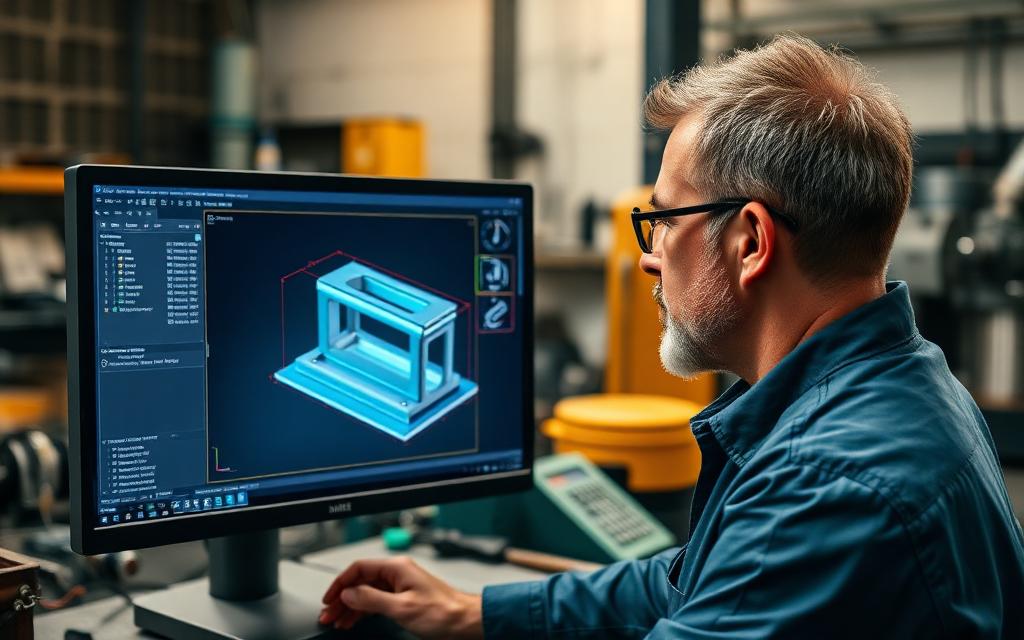
Flags unachievable tolerances, awkward setups and cost drivers at enquiry stage — before the price is committed, not after the first article fails.
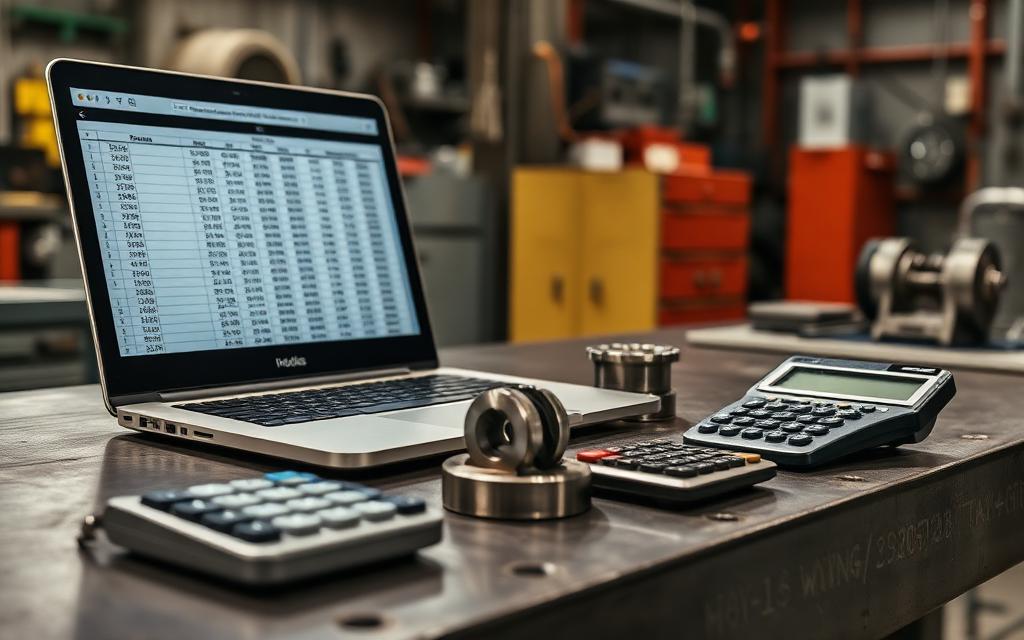
Prices from a structured machine-hour and process cost model, so the same part quotes at the same price to any customer, on any day, from any engineer.
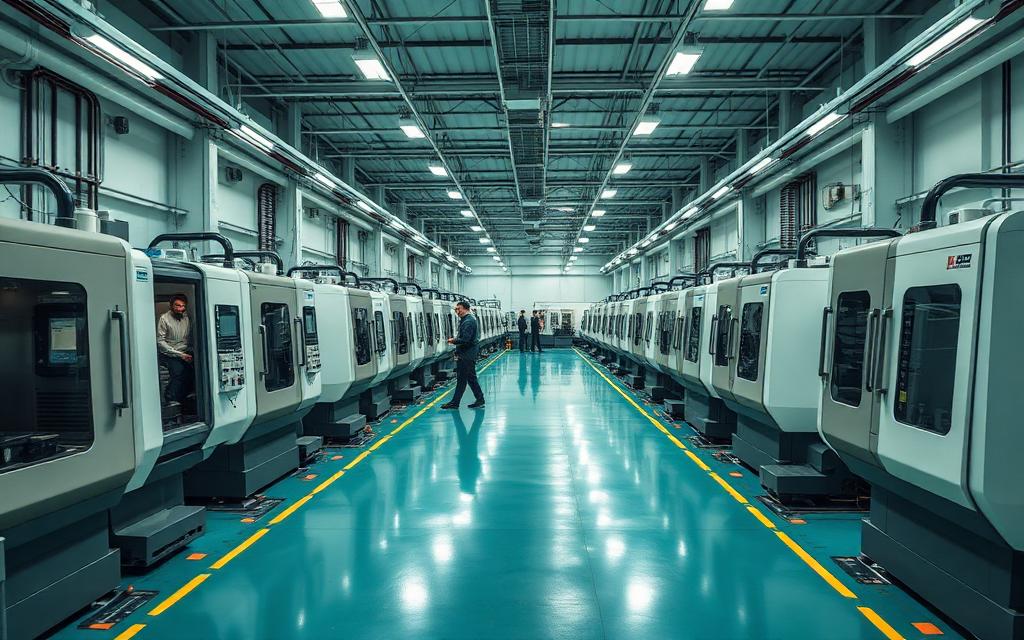
Routes each job to the best-qualified shop on capability, load, quality history and setup fit. Allocation on data rather than habit.
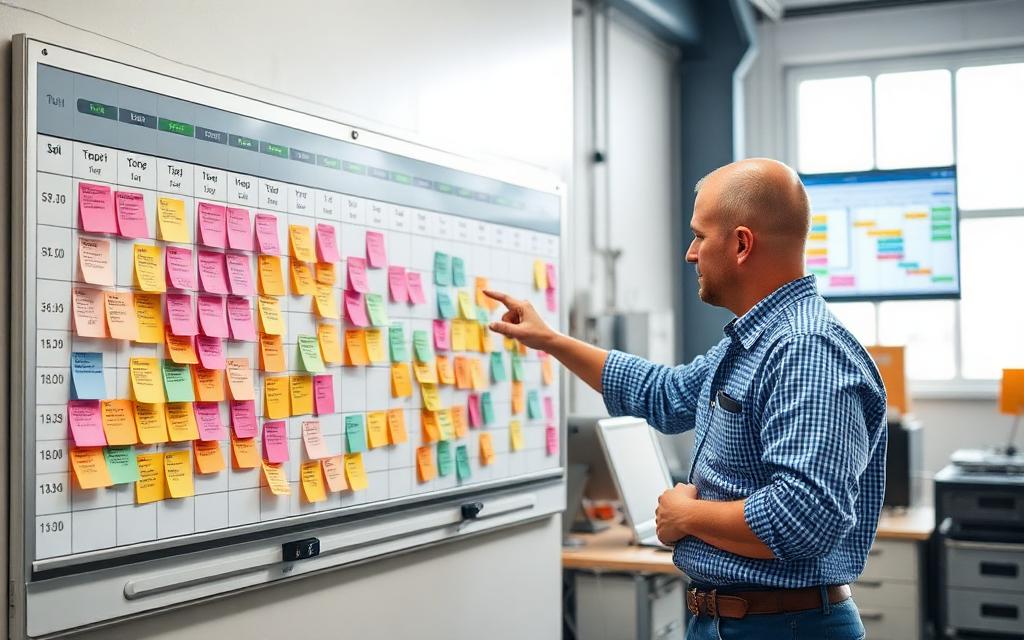
Commits delivery dates against real partner capacity and flags slippage early. An honest date beats an optimistic one in every regulated supply chain.
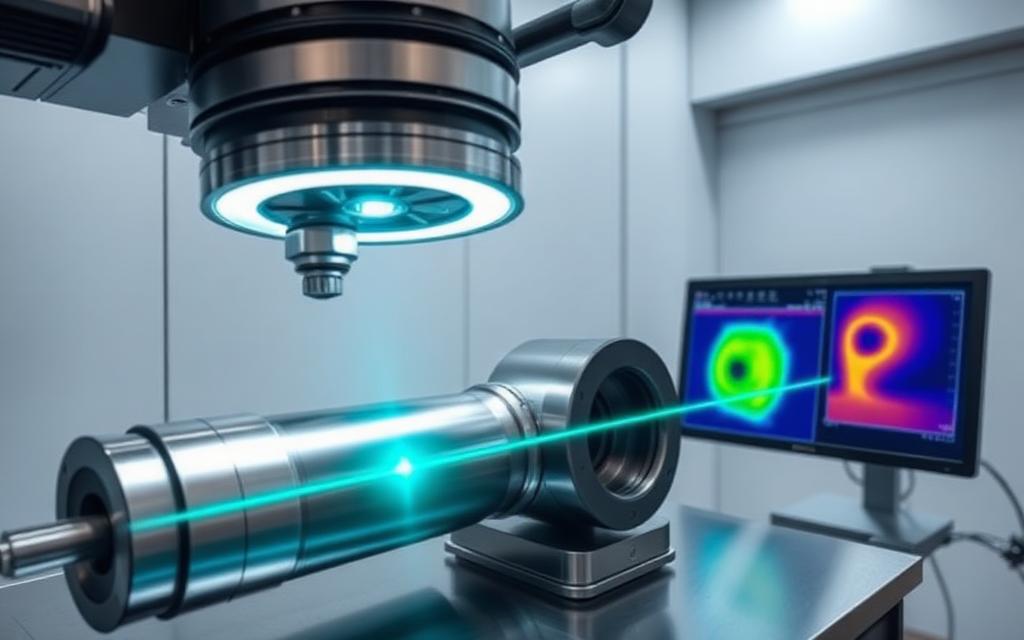
AI-assisted optical inspection and CAD-to-part deviation mapping at production speed. Proof per part, not a sample and a promise.
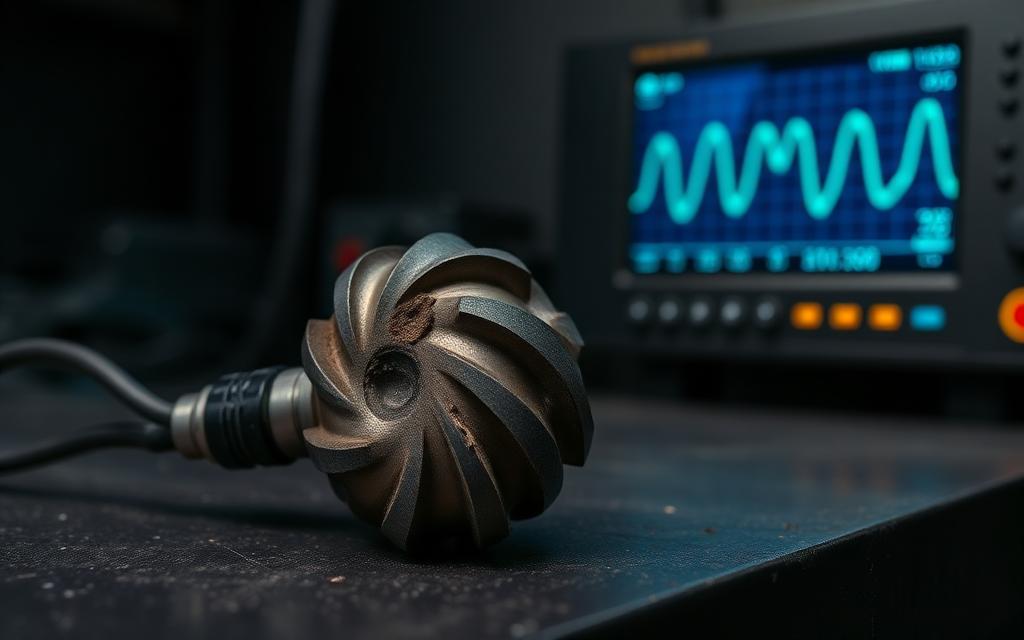
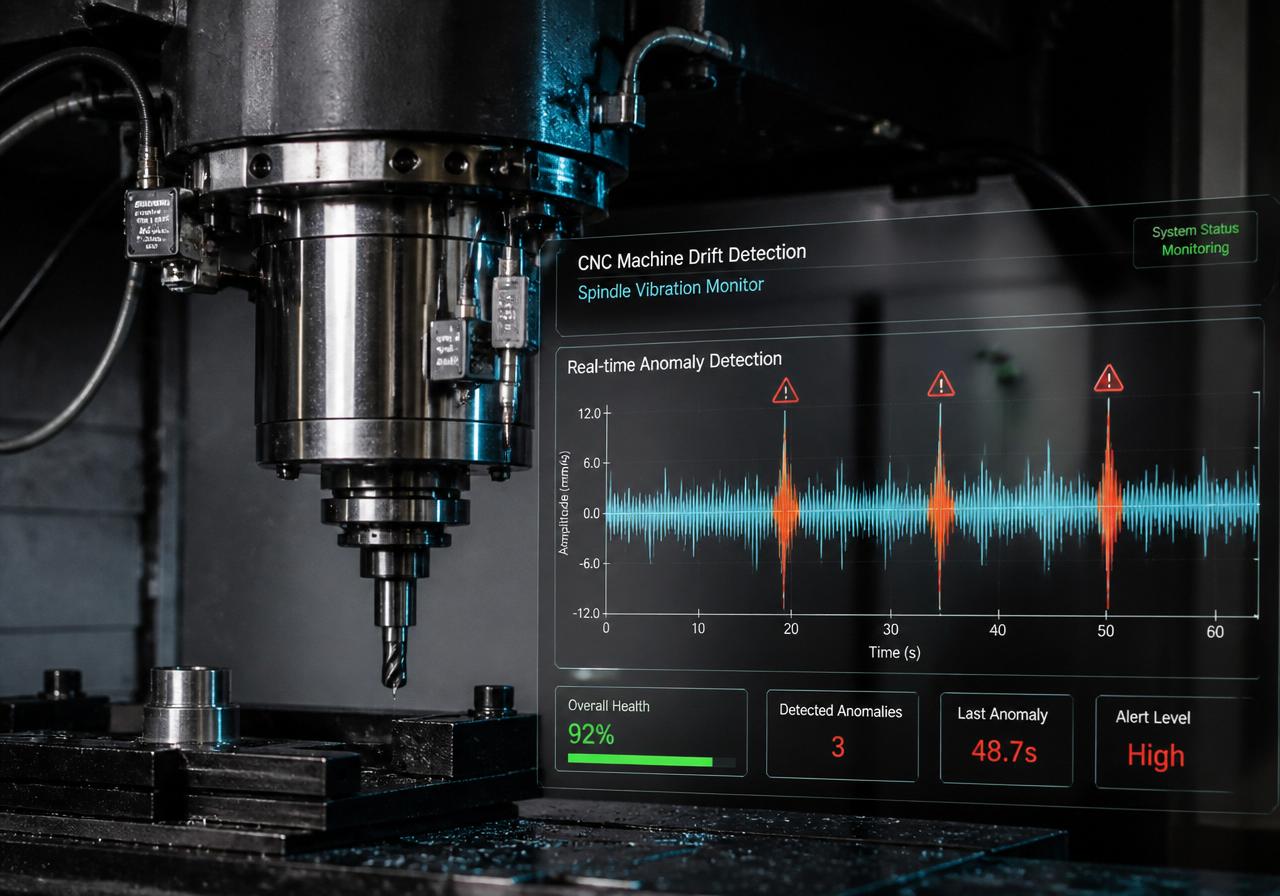
Fuses spindle load, vibration and acoustic signal to catch drift and novel defects — detected before bad parts are made, not after they ship.
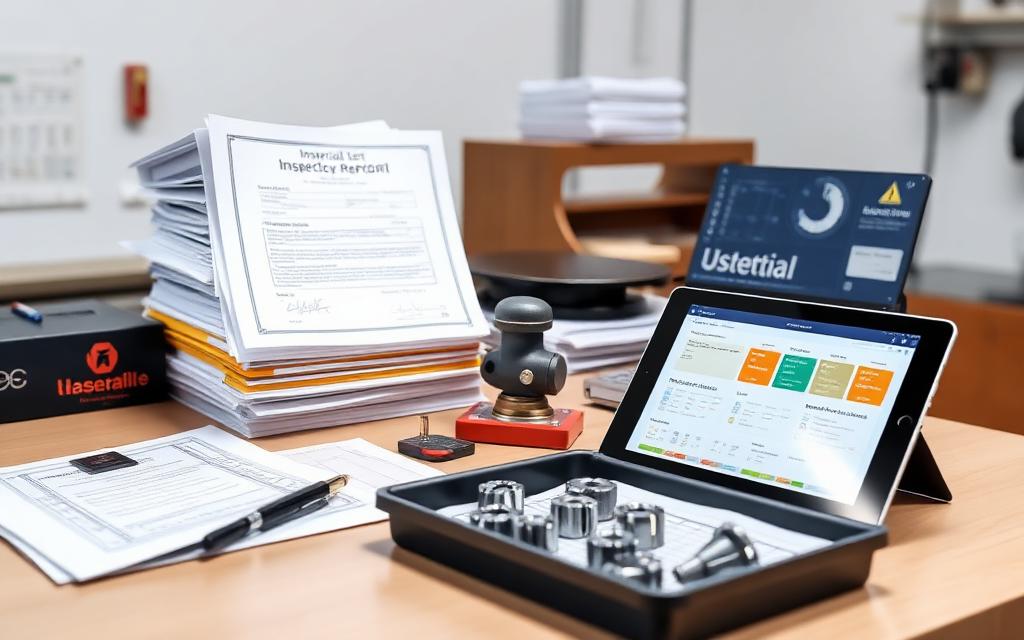
Assembles MTC, FAIR, CoC and PPAP packs from captured production data. Traceability becomes a by-product of running the job, not a week of paperwork.
Tracks every open order across the network, predicts delay and alerts proactively. Problems surface to us before they surface to you.
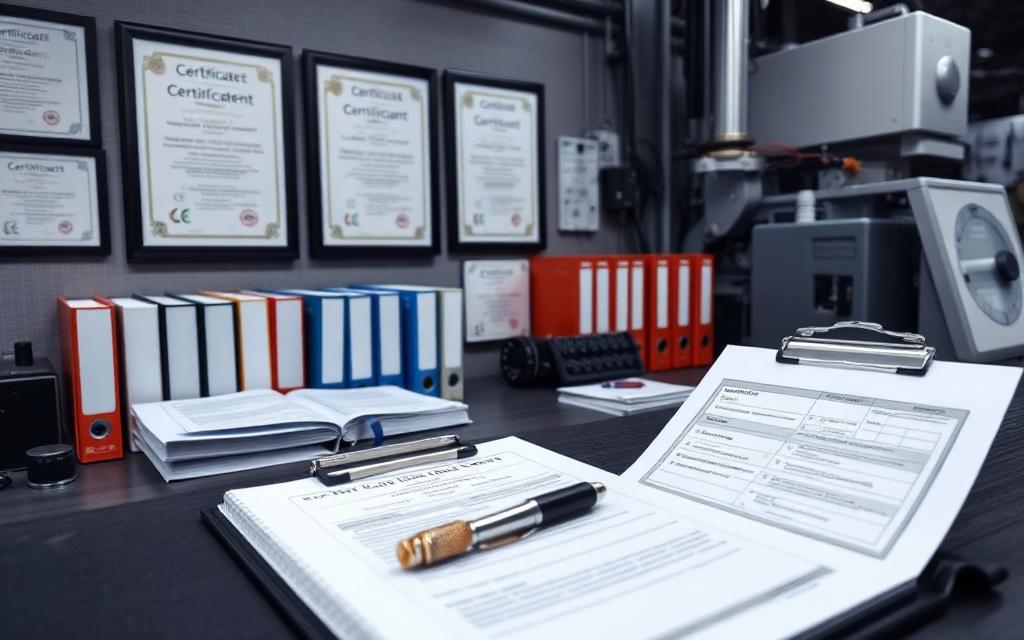
Holds the certification logic: QCO, RDSO, IATF 16949, AS9100D, ISO 13485. Blocks any enquiry we are not yet lawfully qualified to fulfil.
No agent keeps a private version of the truth. Divergent beliefs about the same machine are the root of most coordination failure.
Physical and capability admissibility is tested first. An attractive bid that cannot hold the print is discarded, not discounted.
Models inform decisions; they do not own them. Each is scored, confined to a declared scope, and demoted automatically as it drifts.
Every autonomous action carries its evidence and the alternative it rejected. You will never receive an unexplained algorithmic price from us.
Minutes
quote turnaround on drawing-based RFQs, against an industry norm of two to three days
Per part
inspection evidence, in place of 2–10% manual sampling
One chain
heat number → vendor → operator → inspection → dispatch
8 processes
and 8 industry verticals coordinated on a single control plane
Scale ≠ headcount
the orchestration argument, in one line
A note on honesty. Every module above is labelled by its real status. We would rather tell you exactly what runs today than imply capability we do not yet have. AI augments our metrologists and engineers — it does not replace them, and a named engineer signs every decision that reaches you.
Every part. Every dimension. Documented and traceable.
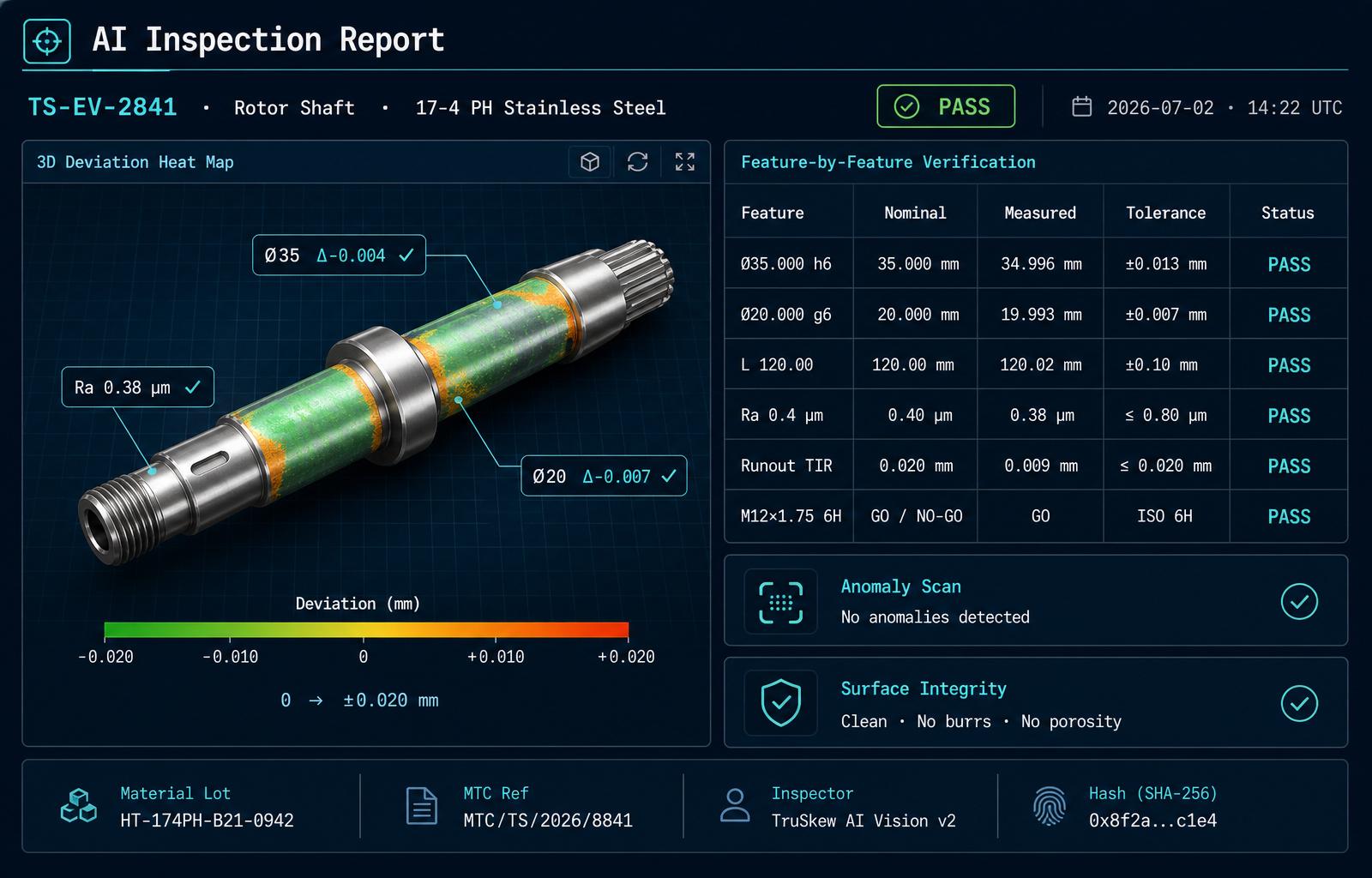
Every part. Every dimension. Documented and traceable.
CV inspection of rotor shafts + balance/runout anomaly detection at 15,000 RPM
Helps prevent micro-imbalance issues — G2.5 verification.
Engineered in-house and led by an AI engineer — not bolted on.
TruSkew is a precision manufacturer founded and led by an AI engineer. While others compete on price, we compete on intelligence. This is a capability we are building deliberately.
We're onboarding a small set of aerospace, medical, EV and defence teams to test our AI-assisted inspection and quality reports on live parts. Add your details and we'll reach out with next steps.
Upload a drawing and we'll show you exactly how AI-assisted precision works — from instant quote to per-part inspection report.